
If you spend time in communities across Sierra Leone, you’ll notice something quickly: people rarely talk openly about epilepsy. Behind closed doors, families worry in silence. Children miss school. Adults withdraw. An estimated 85,000 people live with epilepsy nationwide and as many as 80 to 85 percent do not receive treatment. Not because help doesn’t exist, but because stigma and myths have shaped the story for far too long.
In some villages, seizures are seen as spiritual. Others fear the condition is contagious. Many still turn first to traditional healers or hide a diagnosis out of fear of discrimination. And this is exactly the narrative we set out to change.
A Partnership for Change
Thanks to support from Rotary International and Row Foundation, the Epilepsy Education and Stigma Reduction in Sierra Leone project is bringing together the Healey International Relief Foundation, the Epilepsy Association of Sierra Leone, the Sierra Leone Ministry of Health’s Directorates of Primary Health Care and Non-Communicable Diseases and other partners. Together we are working to rewrite how epilepsy is understood – starting with the people best positioned to shape community beliefs.
At the training, SRN nurse Kadiatu Memuna Mansaray shared something that stayed with everyone in the room: “Epilepsy patients are mostly isolated because of so many stigmas. Now I have the knowledge to help my community.”
Her words captured both the urgency of the challenge and the power of what this project can spark.
Inside the Training: Four Days That Shifted Perspectives

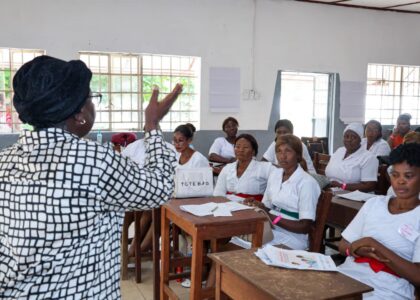
From February 9 to 12, 2026, nine Community Health Workers arrived at Holy Spirit Hospital Makeni with questions, assumptions, and concerns many had heard their whole lives. Some believed epilepsy was contagious. Others had seen families insert objects into a person’s mouth during a seizure or physically restrain them.
But this time, instead of relying on tradition, they were given tools—and knowledge.
Led by experts including Sr. Victoria Tholley from Loreto Health Services, Dr. Ahmeda Kalla-Kalokoh, HIRF-Country Director, and Dr. Osman Kamara from Medics for Epilepsy Support and Treatment, the sessions moved from medical facts to lived experience.
When individuals with epilepsy, like Mr. I. Kamara and Mr. Bai Sesay, shared their stories, the room shifted. Suddenly, epilepsy wasn’t an abstract condition – it was a human experience.
Through demonstrations and role play, participants learned safer first aid techniques, recognized seizure types, and practiced referral decisions based on real village scenarios. Slowly, misconceptions gave way to confidence. Fear gave way to understanding.
By the end of the workshop, the same health workers who once believed common myths were now explaining why restraint is dangerous and how consistent medication can change a life.
When Communities Come Together, Change Begins
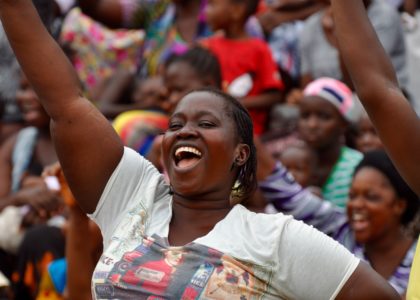
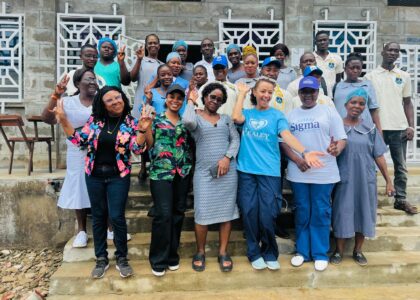
One of the most powerful moments came during the stakeholder meeting, where 34 community leaders – traditional healers, section chiefs, youth and women leaders, motorbike riders – joined the conversation. Their influence reaches thousands, and their understanding can transform how families respond to epilepsy. When they leave with accurate information, stigma begins to weaken.
As newly trained health workers stood before them to address myths and share practical guidance, the room felt like a turning point. These were conversations many communities had never witnessed before – open, informed, and compassionate.
Even the Paramount Chief of Makarie Chiefdom visited to show support, signaling how deeply the message resonated.

The Work Continues – District by District


Training week may be over, but the impact is already spreading. Health workers returned to their catchment areas, walking from home to home, talking with families, correcting misconceptions, and encouraging early diagnosis and consistent treatment.
And this is only the beginning. “In Bombali District, the training highlighted both deep stigma and a strong desire for better understanding,” reflected Dr. Ahmeda. “When health workers and community leaders speak openly, it creates space for change.”
With upcoming workshops in Bo and Pujehun Districts, more communities will join this growing movement.
The training in Makeni is more than an event—it is the start of a new narrative. One where epilepsy is not feared but understood. Not hidden but treated. Not a source of shame, but a condition that communities can support with dignity, compassion and knowledge.
This is how change takes root—one conversation, one trained health worker, one empowered community at a time.